

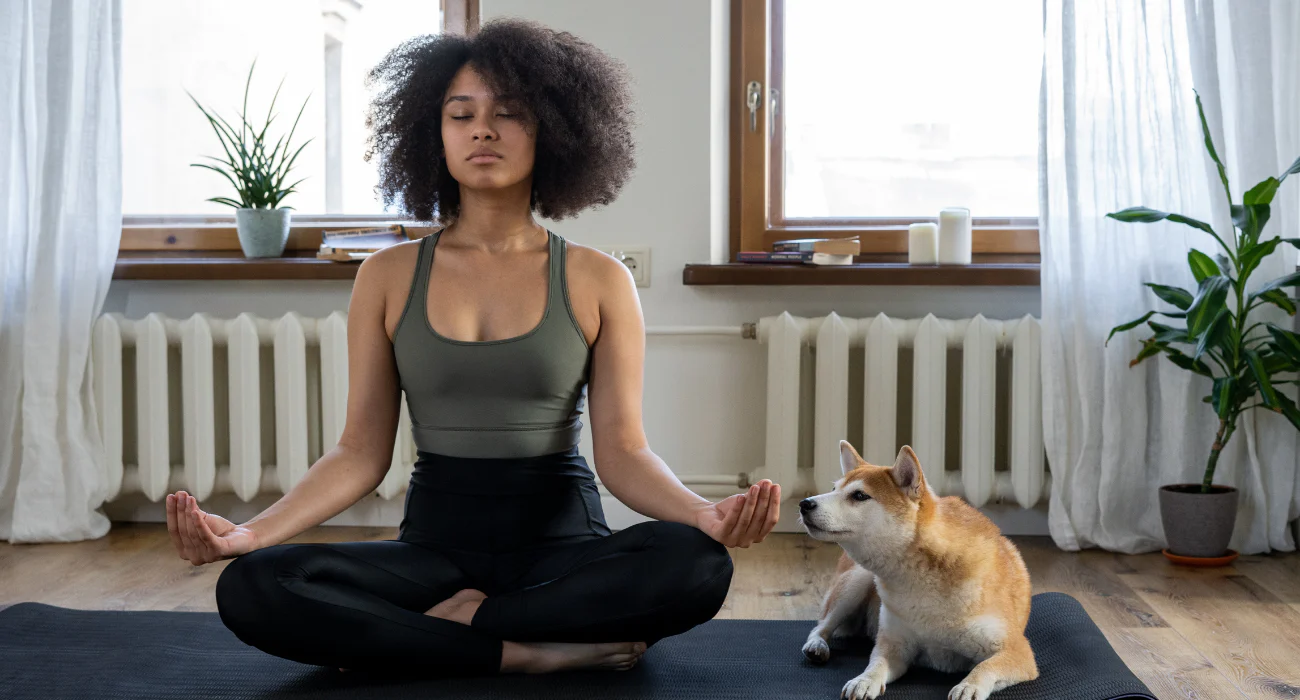
There is no single “correct” way to meditate, but there are key principles that separate effective practice from sitting quietly and getting frustrated. Learning how to meditate properly means training your attention: noticing when your mind wanders and gently bringing it back without judgment.
If you’ve tried meditating before and ‘couldn’t stop thinking’, you were actually doing it right. The thinking isn’t the problem – noticing the thinking is the whole point.
The 5 Core Steps
Step 1 – Choose a Time and Place
Consistency matters more than duration at the start. Pick a specific time (morning works best for most people) and a quiet spot where you won’t be interrupted for even 5 minutes.
Step 2 – Sit Comfortably
You don’t need a cushion or a lotus position. Sit in a chair with your feet flat on the floor, back straight but not rigid. Lying down works too – just know you might fall asleep.
Step 3 – Set a Timer
Start with 5 minutes. Knowing the timer will end removes the urge to check the clock constantly. Build up to 10 or 20 minutes only when 5 feels easy.
Step 4 – Focus on Your Breath
Close your eyes. Breathe naturally. Focus on the sensation of air entering and leaving your nose, or the rise and fall of your chest. You’re not controlling your breath – just observing it.
Step 5 – Bring Your Mind Back
Your mind will wander. That’s not failure. When you notice you’ve been thinking about your to-do list or last night’s dinner, gently return to the breath. This ‘return’ is the actual exercise.
Common Meditation Styles
| Style | Duration | Best For | Difficulty |
| Breath Awareness | 5-20 min | Beginners, stress relief | Easy |
| Body Scan | 10-30 min | Sleep, tension release | Easy |
| Loving-Kindness (Metta) | 10-20 min | Anxiety, relationship stress | Medium |
| Visualization | 10-20 min | Goal-setting, creative work | Medium |
| Transcendental Meditation | 20 min x2/day | Deep relaxation, experienced practitioners | Requires instruction |
| Vipassana (Insight) | 30+ min | Deep self-awareness | Advanced |
Tips for Beginners
- Don’t aim for a blank mind. Aim for awareness of your mind.
- Use an app for guided sessions in the first few weeks – it removes decision fatigue.
- If 5 minutes feels like an hour, try 2 minutes. Seriously. That still counts.
- Missing a day is fine. Missing two weeks is fine. Just start again without drama.
Common Mistakes (And What to Do Instead)
| Mistake | Why It Happens | What to Do Instead |
| Trying to stop thinking | Misconception that meditation = silence | Observe thoughts without engaging them |
| Forcing deep breaths | Thinking technique improves results | Breathe completely naturally |
| Meditating only when stressed | Using it as emergency relief only | Build a daily habit, even on good days |
| Judging your sessions as good or bad | Performance mindset | Every session has value, including distracted ones |
How Long Before You See Results?
Most people notice small shifts within 2 to 3 weeks of consistent daily practice: slightly less reactive, slightly calmer in stressful moments. Significant changes in focus and emotional regulation typically show up after 60-90 days.
A 2011 Harvard study found that 8 weeks of mindfulness meditation produced measurable changes in brain structure – specifically in areas related to memory, empathy, and stress. You don’t need 8 weeks to feel something. But you do need more than two sessions.
Recommended Apps to Get Started
| App | Best For | Price |
| Headspace | Structured beginner courses | Free trial / $12.99/mo |
| Calm | Sleep meditations + daily sessions | Free / $14.99/mo |
| Insight Timer | Huge free library, no paywall | Free (premium optional) |
| Waking Up (Sam Harris) | Philosophy + practice combined | $99/year |
Insight Timer is the best free option. If you’re serious about building a long-term practice, Headspace’s structured courses are worth the cost for the first 3 months.
